

|
||
|
|
||
|
||
|
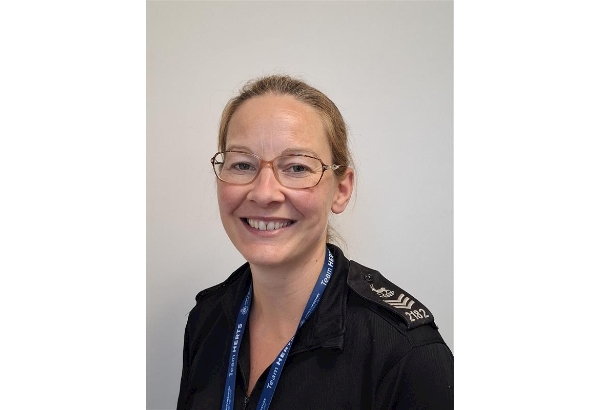
Spotlight on Broxbourne Community Safety Unit Sergeant |
||
|
Dear Resident
As part of Anti-Social Behaviour Awareness Week, we have caught up with one of our community safety sergeants, who has given an insight into her role and the work that goes into tackling and reducing anti-social behaviour (ASB).
In this Q&A, Broxbourne Community Safety Sergeant Clare Ramirez explains more about how these measures are used in practice and what action is being taken locally during #ASBAwarenessWeek this week.
Clare explains how anti-social behaviour can have a significant impact on victims, families and communities, and how police and partners use a combination of enforcement, prevention and support to tackle persistent issues and improve quality of life.
As part of our ongoing work to keep communities safe, the Broxbourne Community Safety Unit (CSU) works closely with local Neighbourhood Policing Teams to tackle crime and anti-social behaviour, as well as develop long-term preventative solutions.
We use a wide range of approaches, from public engagement and targeted patrols to enforcement action, civil orders and multi-agency partnership work, to address the issues that matter most to residents and hold those responsible to account.
Q: What is your role and what does the Community Safety Unit do? CSU plays a key role in tackling ASB and improving the quality of life for residents. While we work very closely with Neighbourhood Policing Teams, we are a separate team with a specialist focus on problem-solving, safeguarding and using longer-term interventions to address persistent issues. Neighbourhood officers are often the first point of contact within communities, carrying out patrols, responding to concerns and gathering information from residents. The CSU supports this work by reviewing ongoing ASB issues, coordinating partnership responses and considering what powers or interventions may be appropriate to achieve lasting solutions. We work alongside local authorities, housing providers, environmental health teams, youth services and other partner agencies to tackle the causes as well as the symptoms of ASB. This can include using tools such as Community Protection Notices, Closure Orders and Criminal Behaviour Orders, as well as supporting vulnerable victims and identifying opportunities for early intervention. By working together with neighbourhood officers, we can combine local knowledge with specialist problem-solving and partnership working. This helps ensure that communities receive both an immediate response to concerns and a coordinated plan to prevent issues from recurring in the future. Ultimately, our aim is to reduce harm, safeguard those affected by ASB and help create safer, stronger and more confident communities.
Q: For people who might not realise, what counts as anti-social behaviour? Anti-social behaviour (ASB) is any behaviour that causes harassment, alarm or distress to others. It can cover a wide range of issues, from persistent noise nuisance, street drinking and drug-related activity to vandalism, graffiti, abusive behaviour, off-road bikes, neighbour disputes and intimidation. What may seem like low-level behaviour to some can have a significant impact on those experiencing it regularly. ASB is often about the effect the behaviour has on victims, families and the wider community. The usual rule of thumb is, if you are becoming alarmed or distressed by behaviour causing you harassment, it is best to report it to your local officers or online, this way we know where we need to focus our priorities.
Q: Has ASB changed in recent years, and if so, how? While traditional forms of ASB such as vandalism, nuisance vehicles and rowdy behaviour remain common, we have seen some changes in recent years. Social media can sometimes be used to organise gatherings that lead to disorder or nuisance, while reports involving off-road bikes, e-scooters and other vehicles have become more prevalent in some areas. Communities are also increasingly reporting concerns linked to public drug use and associated criminality. At the same time, public awareness has grown, and people are more willing to report issues that affect their quality of life, which helps agencies respond more effectively. We also have a safeguarding role which includes those who have experienced domestic abuse (working closely with our specialist Domestic Abuse Investigation and Safeguarding Unit), mental health issues and young vulnerable girls at risk of sexual exploitation.
Q: What impact can ASB have on victims and communities? The impact can be significant and should never be underestimated. Victims often tell us ASB makes them feel anxious, isolated or even frightened in their own homes. In some cases, it can affect mental health, sleep, work and day-to-day life. For communities, persistent ASB can undermine confidence, damage local environments, discourage people from using public spaces and create a perception that an area is unsafe. Tackling ASB is therefore about improving quality of life as well as addressing offending behaviour.
Q: What powers and tactics are available to tackle ASB? Police and partner agencies have a range of powers available depending on the circumstances. These include: The most effective response is often a combination of enforcement, prevention, and support.
Q: How important is partnership working in tackling ASB? Partnership working is essential. ASB issues are rarely matters for the police alone. Local authorities, housing providers, schools, youth services, environmental health teams, community groups and other agencies all have an important role to play. By sharing information, identifying root causes and coordinating action, partners can often achieve far better outcomes than any organisation working in isolation. This approach helps ensure that enforcement is used where necessary while also providing support and intervention to prevent issues recurring.
Q: What role can residents play in helping to tackle ASB and why is it important that people report it? Residents are often the eyes and ears of their communities and play a crucial role in helping us identify issues. Reporting ASB helps build a picture of what is happening, where problems are occurring and who is being affected. Even if an incident appears minor, repeated reports can demonstrate patterns of behaviour and provide evidence to support enforcement action. We would encourage people not to assume someone else has reported an issue. The more information we receive, the better equipped we are to work with partners and take appropriate action.
Ultimately, tackling ASB is a shared responsibility, and communities are strongest when residents, police and partner agencies work together to address local concerns and improve neighbourhoods.
Q: Any examples of good success stories around ASB? Some of the most successful outcomes come through long-term problem-solving rather than a single enforcement action. For example, repeated complaints about nuisance behaviour at a specific address can be resolved through partnership working, leading to warning notices, support for vulnerable occupants and, where necessary, a Closure Order. This can result in a dramatic reduction in calls for service and an improved quality of life for neighbours. Similarly, targeted operations against nuisance vehicles or off-road bikes often lead to vehicle seizures and a noticeable reduction in complaints from residents. Every community is different, but successful ASB work usually involves listening to residents, gathering evidence and working closely with partners to achieve sustainable solutions.
| ||
Reply to this message | ||
|


|